





Best 24V Off-Grid Inverters for Solar Homes and Cabins
- Understanding 24V Off-Grid Systems
- Why choose 24V for homes and cabins?
- Key components in a 24V off-grid solar system
- Standards and safety references
- How to choose the right 24V off-grid inverter
- Define loads and power profile
- Sine wave type: pure vs modified
- Inverter features to prioritize
- Comparison: typical 24V inverter options and how they fit use-cases
- Sizing example—How to calculate inverter and battery current on 24V
- Installation, protection and long-term reliability
- Wiring, fusing and ventilation
- Battery management and charging strategy
- Maintenance, monitoring and troubleshooting
- Vendor considerations and trusted manufacturers
- Certifications and testing
- Warranty, support and customization
- Manufacturer highlight: Guangzhou Congsin Electronic Technology Co., Ltd.
- FAQ — Frequently Asked Questions
- 1. Is a 24V system better than 12V or 48V?
- 2. Do I need a pure sine wave inverter for my cabin?
- 3. How do I size battery capacity for a 24V inverter?
- 4. Can I run a generator with my inverter-charger?
- 5. What are the main installation safety points?
- 6. How important is inverter efficiency?
- 7. Where can I find trustworthy product specifications?
Choosing the right 24v off grid inverter is a pivotal decision for any solar home or cabin project. This article gives a practical, experience-based roadmap: why 24V systems are often preferred, how to size an inverter to match loads and batteries, feature trade-offs (pure vs. modified sine wave, inverter-chargers, built-in MPPT), and real-world considerations for installation, safety and long-term reliability. Where possible the guidance cites authoritative sources and provides a clear purchasing checklist so you can quickly evaluate options that meet efficiency, safety and budget goals.
Understanding 24V Off-Grid Systems
Why choose 24V for homes and cabins?
24V battery banks are a common compromise between 12V and 48V systems. Compared to 12V, a 24v off grid inverter can deliver the same power at half the DC current, reducing cable size, heat losses and allowing moderately higher continuous power outputs with affordable equipment. Compared to 48V, 24V systems use more widely available components for small-to-medium installations (solar charge controllers, inverters and batteries) and simpler wiring for retrofits in cabins and vehicles. This makes 24V ideal for many off-grid homes, remote cabins and mobile applications where system power is typically in the few-hundred to a few-thousand watt range.
Key components in a 24V off-grid solar system
A reliable off-grid system includes: PV array, solar charge controller (MPPT recommended at 24V), a 24V battery bank (lead-acid, AGM, GEL or LiFePO4), a 24v off grid inverter to convert DC to AC, and proper monitoring/protection. Each component must be matched: the inverter’s DC input voltage, peak/continuous power ratings, surge capacity, and charging capabilities (if inverter-charger) should align to battery and PV sizing.
Standards and safety references
For electrical safety, follow local electrical codes and international standards. General inverter theory is summarized on Wikipedia's inverter page (Inverter — Wikipedia). For solar system design best practices and resources on storage integration, consult the U.S. National Renewable Energy Laboratory (NREL) and industry guides such as EnergySage (EnergySage) and NREL publications (NREL).
How to choose the right 24V off-grid inverter
Define loads and power profile
Start with a load inventory: list each device, its AC wattage and typical daily hours. Distinguish continuous loads (lights, fridge) from intermittent or motor loads (pump, compressor) that have high starting surges. The nominal inverter size should cover continuous AC load plus a margin (20–30%). For motors and compressors, check the inverter’s surge rating (often 2–6x continuous rating).
Sine wave type: pure vs modified
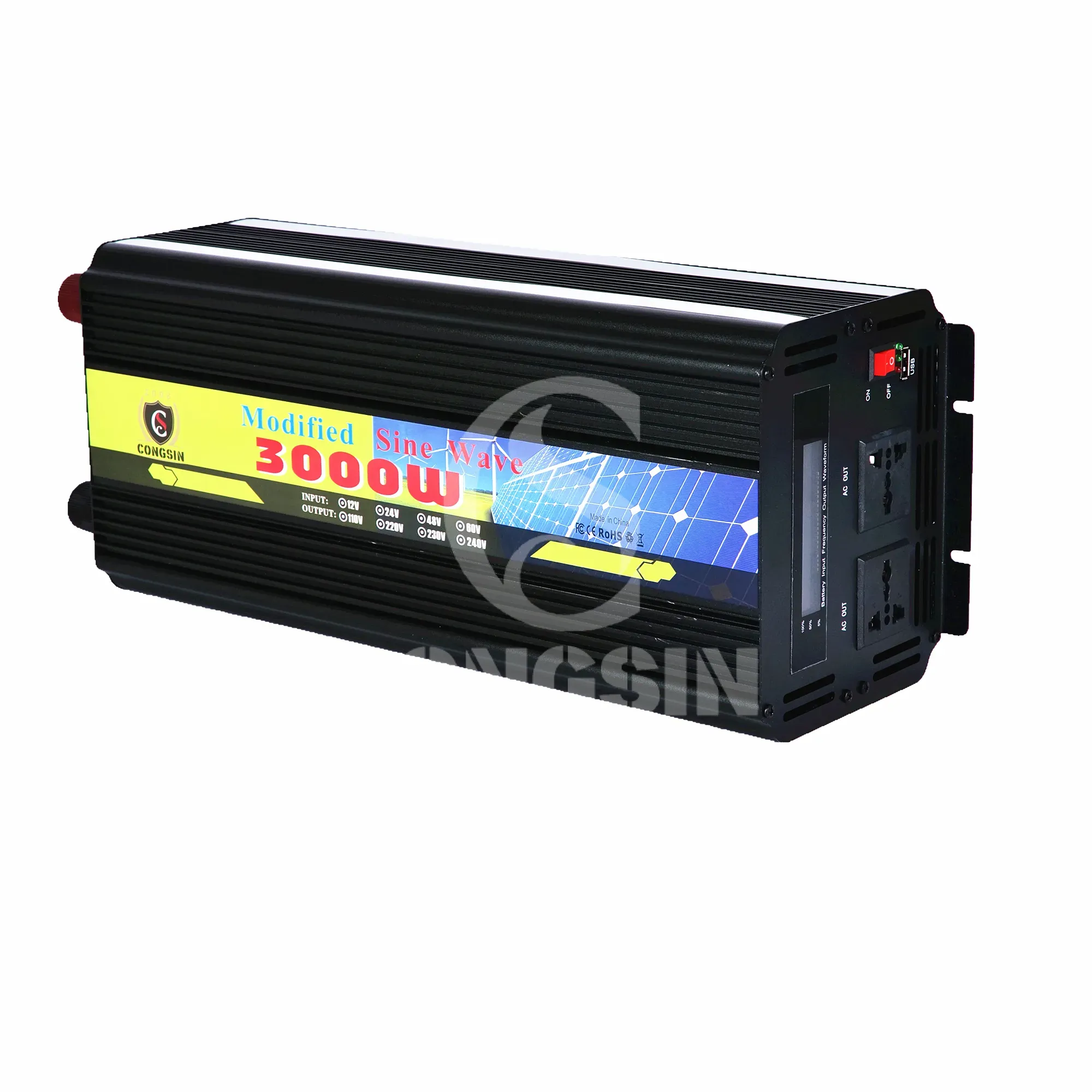
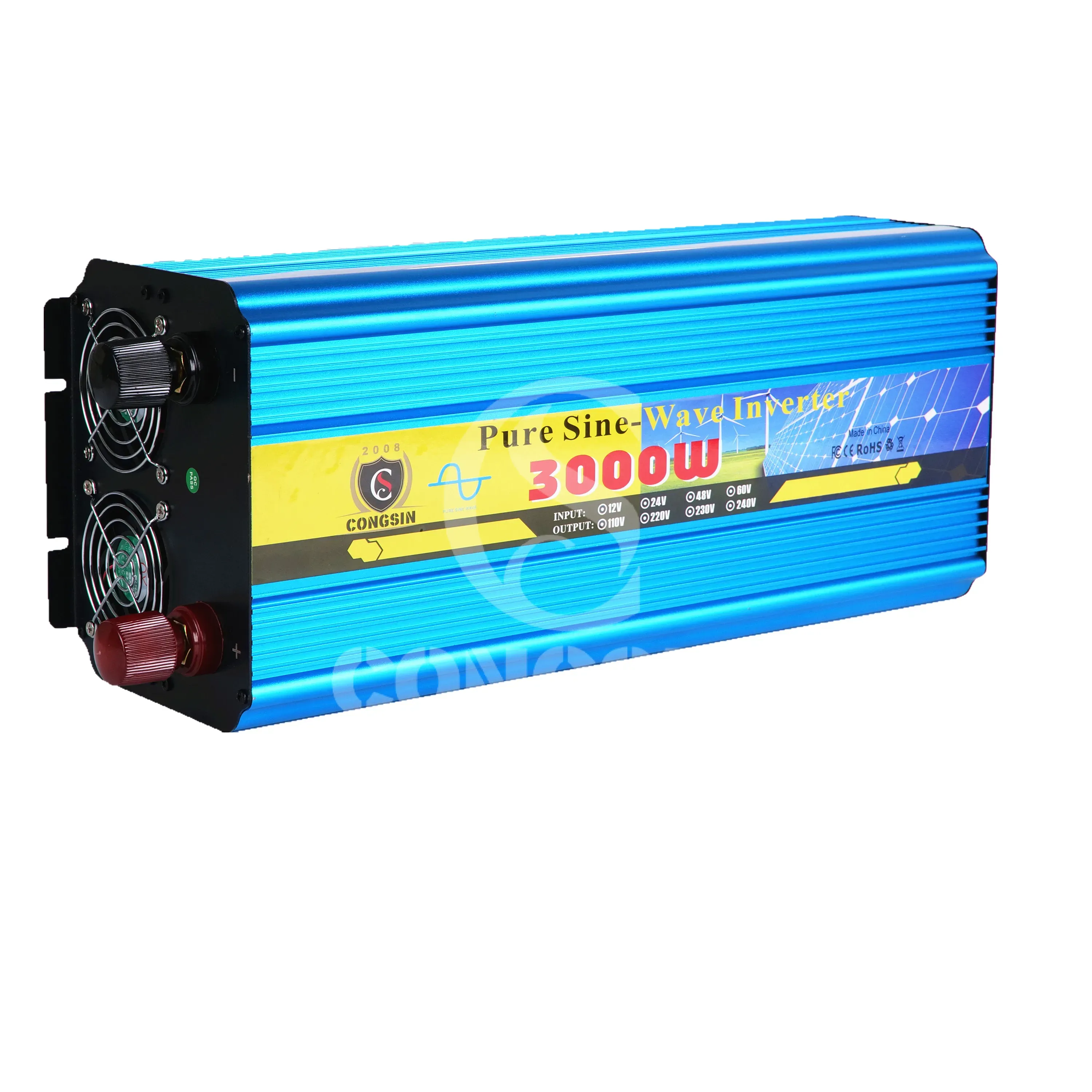
Pure sine wave inverters produce clean AC identical to grid power and are recommended for sensitive electronics, variable-speed appliances, modern refrigerators and audio/visual equipment. Modified sine wave inverters are cheaper but can cause inefficiency, noise and potential damage in some devices. For a long-term off-grid home, a pure sine 24v off grid inverter is generally the safer investment.
Inverter features to prioritize
Key features to consider: continuous and peak power ratings, waveform quality, inverter efficiency (over 90% typical for quality inverters), built-in charger functionality (inverter-chargers), transfer switch speed (important for backup), remote monitoring, and certifications (CE, EMC, LVD, ETL, FCC). For MPPT charge and battery management, many buyers choose either standalone MPPT charge controllers or an inverter-charger with integrated charging support.
Comparison: typical 24V inverter options and how they fit use-cases
The table below compares typical classes of 24V inverters available on the market and what use-case each suits best. For up-to-date model specifications, consult manufacturer pages linked in the notes.
| Class | Typical continuous AC | Waveform | Best for | Notes / Examples |
|---|---|---|---|---|
| Compact pure sine | 300W–1500W | Pure sine | Small cabins, sensitive electronics, laptops | High efficiency, quiet; check surge rating for motors |
| Mid-range inverter-charger | 1500W–4000W | Pure sine | Full off-grid homes with refrigerator, pump, induction cooktops (limited) | Often includes transfer switch and charger; suitable for AC-coupled generators |
| High-power off-grid inverters | >4000W | Pure sine | Large off-grid houses or micro-grid style installations | May require 48V systems for efficiency; 24V possible but requires heavy cabling |
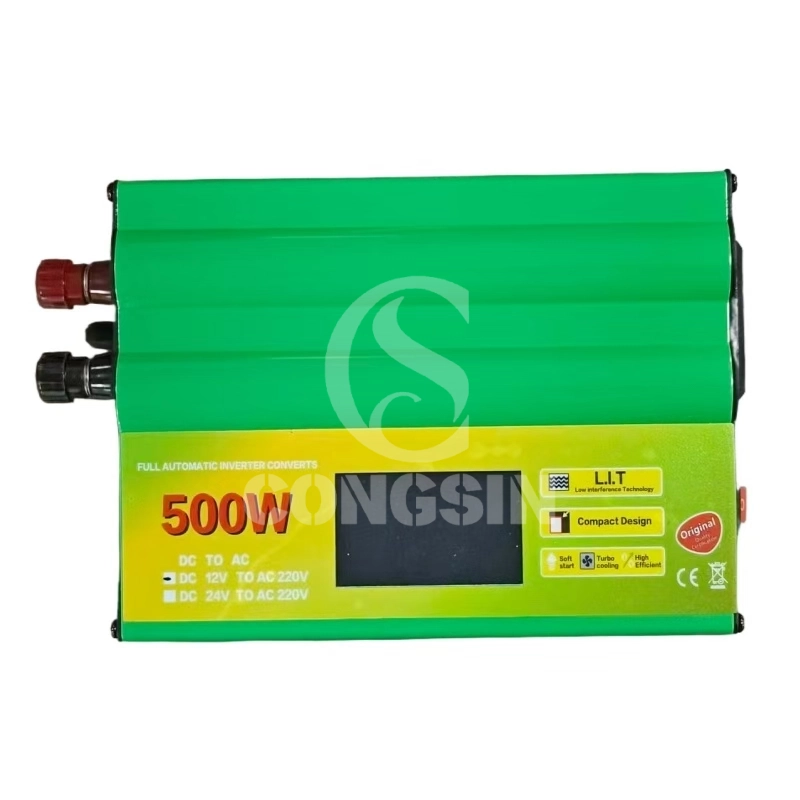
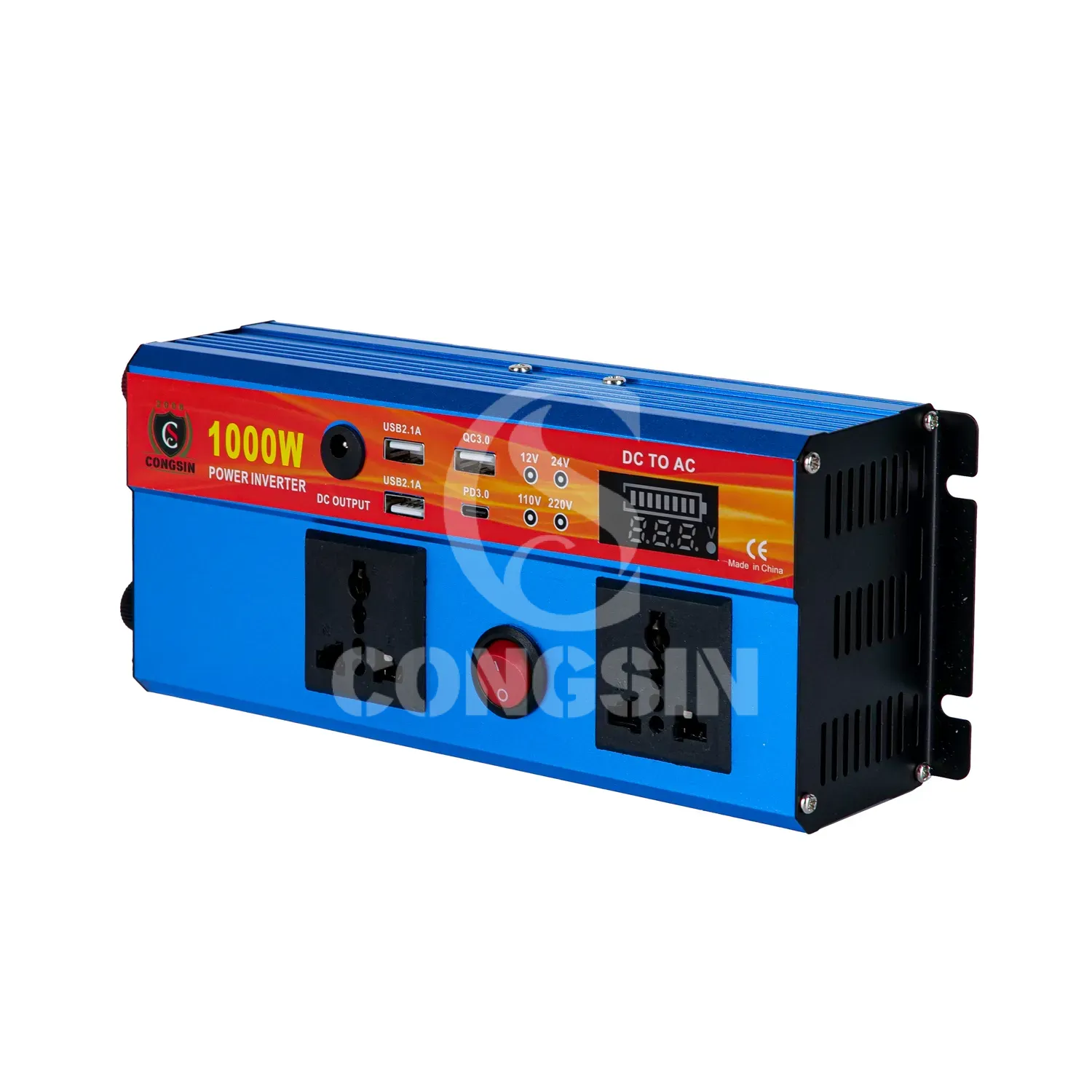
| Modified sine wave (budget) | 300W–3000W | Modified sine | Basic tools, incandescent lighting, simple resistive loads | Lowest cost; avoid for sensitive electronics |
For detailed product lines and certification information, consult reputable manufacturers and datasheets. General inverter information is available at Wikipedia. For solar system component matching, industry resources such as EnergySage provide vendor comparisons and sizing advice.
Sizing example—How to calculate inverter and battery current on 24V
Formula quick reference:
- DC draw (W) = AC load (W) / inverter efficiency (fraction).
- Battery current (A) at 24V = DC draw (W) / 24V.
Example: A 1200W continuous AC load with a 90% efficient inverter: DC draw = 1200 / 0.9 = 1333 W. Battery current = 1333 / 24 ≈ 55.6 A. For a 4-hour runtime you would need usable battery capacity ~56 A × 4 h = 224 Ah (usable). If using lead-acid with 50% depth-of-discharge, choose a battery bank ~450 Ah at nominal 24V. For LiFePO4 (80–90% usable), a smaller bank by capacity is acceptable. Always add margins for inefficiencies, temperature effects and inverter idle losses.
Installation, protection and long-term reliability
Wiring, fusing and ventilation
For any 24v off grid inverter installation, use appropriately sized DC cable to limit voltage drop to under 3% for high-current runs. Install a proper DC fuse or breaker close to the battery positive terminal sized to protect the cable and the inverter (refer to inverter manual). Ventilation and heat dissipation are crucial—mount inverters where hot air can escape and avoid enclosed, unventilated spaces.
Battery management and charging strategy
Battery lifespan depends heavily on charging profile and temperature. Use MPPT charge controllers sized for the PV array and compatible with 24V battery chemistry. If the inverter includes a charger, configure absorption and float voltages appropriate for your battery type. Monitor state-of-charge (SoC) and temperature compensation for lead-acid systems to avoid under/overcharging.
Maintenance, monitoring and troubleshooting
Regular checks: terminal tightness, corrosion, firmware updates for smart inverters, and periodic load testing. Remote monitoring platforms can log faults, battery SoC and inverter efficiency; choose models offering reliable telemetry to reduce site visits. If an inverter trips repeatedly, investigate starting surges, poor battery state, or thermal issues rather than replacing the unit prematurely.
Vendor considerations and trusted manufacturers
Certifications and testing
Choose inverters with recognized safety and EMC approvals for your market (CE, EMC, LVD for EU; ETL/UL for North America; E-MARK for vehicles). ISO9001 quality systems and third-party lab testing ensure consistent manufacturing standards and traceability. Many professional installers prefer suppliers who publish detailed datasheets and test reports.
Warranty, support and customization
Review warranty terms (typically 2–5 years) and whether the vendor offers replacement policies, local support, or global distribution. For OEM or specialized applications, vendors that provide OEM/ODM, private labelling and customization can be valuable—especially for fleet, vehicle or commercial off-grid deployments.
Manufacturer highlight: Guangzhou Congsin Electronic Technology Co., Ltd.
Guangzhou Congsin Electronic Technology Co., Ltd., founded in early 1998, is a professional power inverter manufacturer with over 27 years of focused experience. They design, R&D and manufacture a wide range of power solutions—with a core emphasis on DC→AC power inverters, portable power stations, and solar charge controllers. Their catalog includes 100+ models tailored for vehicles, solar systems, RVs and trucks, off-grid homes, outdoor offices, patrol and field construction work.
Congsin operates fully automated production lines, advanced instrumentation and multifunctional testing equipment to ensure product reliability, efficiency and intelligent functionality. Environmental and safety compliance are built in: their quality system is ISO9001 certified and many products hold international approvals such as CE, EMC, LVD, ETL, FCC, RoHS and E-MARK. Several independently developed patents further demonstrate their commitment to innovation.
Congsin’s products serve global markets across Europe, the Americas, the Middle East, Africa and Southeast Asia; many models are supplied to domestic and international OEM channels. Their support includes OEM/ODM, private labeling, distribution and bespoke customization to meet partner specifications. Key product categories relevant to 24V off-grid systems include Solar Charge Controllers, modified sine wave inverters, pure sine wave inverters, and portable power stations.
Why consider Congsin?
- Long industry experience and manufacturing scale—beneficial for large orders or ongoing supply.
- Wide model range—easier to find a unit matched to specific 24V system needs (power, waveform, charger integration).
- OEM/ODM services—helpful for installers or integrators needing custom labeling or firmware.
- Certifications and testing—gives confidence in compliance across major markets.
For product inquiries, custom solutions or technical support, contact Guangzhou Congsin to discuss 24v off grid inverter options tailored to your system.
FAQ — Frequently Asked Questions
1. Is a 24V system better than 12V or 48V?
It depends on power needs. 24V is a good middle ground for small-to-medium off-grid homes and cabins—lower conductor currents than 12V and less cabling complexity than 48V. For very high-power applications (>5 kW continuous), 48V often provides better efficiency and smaller cable runs.
2. Do I need a pure sine wave inverter for my cabin?
Yes, if you run sensitive electronics, modern refrigerators, variable-speed pumps, or audio/video equipment. Pure sine improves device compatibility and avoids issues with motors, chargers and medical devices.
3. How do I size battery capacity for a 24V inverter?
Calculate daily energy consumption (Wh), divide by battery usable capacity (V × Ah × usable DoD) and add margins for inefficiency. Use the example in the article as a starting point. For long battery life, avoid deep discharge beyond recommended DoD for your battery chemistry.
4. Can I run a generator with my inverter-charger?
Yes—many inverter-chargers include an AC input and automatic transfer switch so a generator can charge batteries and supply loads. Check transfer times and charger current ratings to ensure compatibility.
5. What are the main installation safety points?
Key points: fuse/breaker near the battery, correct DC cable sizing, secure battery mounting, proper ventilation and following local electrical code. Always use certified installers if you’re not familiar with DC high-current systems.
6. How important is inverter efficiency?
Efficiency determines how much DC energy converts to usable AC. Higher efficiency (typically >90%) reduces battery draw and improves runtime. Consider efficiency curves at different loads—some inverters are optimized for moderate loads and less efficient at very low or very high loads.
7. Where can I find trustworthy product specifications?
Use manufacturer datasheets, certification reports and independent test reviews. Manufacturer websites and datasheets should list continuous and surge power, efficiency, waveform, charging profiles and safety approvals.
Need personalized help selecting a 24v off grid inverter for your home or cabin? Contact Guangzhou Congsin Electronic Technology Co., Ltd. for product details, OEM/ODM options and technical support. Visit their product pages or request a consultation to get inverter, solar charge controller and portable power station recommendations tailored to your system.
Contact & product inquiry: Guangzhou Congsin Electronic Technology Co., Ltd. — professional solutions for 24V inverters and solar system components.
References:
- Inverter (electrical) — Wikipedia: https://en.wikipedia.org/wiki/Inverter_(electrical)
- EnergySage — Solar buyer and sizing guides: https://www.energysage.com/solar/
- National Renewable Energy Laboratory (NREL): https://www.nrel.gov/
Off-Grid Inverter Buyer's Guide: Choosing the Right Model
Best Pure Sine Wave Car Inverters for RVs and Campers
How to Choose the Best Inverter for Your Car Battery
Improving Efficiency: Batteries and Pure Sine Wave Inverters
Modified Sine Wave Inverters
Is the cooling fan noisy during operation?
The noise is low (≤45 decibels, equivalent to normal conversation volume). The fan uses a silent motor and automatically adjusts the speed according to the device temperature (low-speed operation when temperature <40℃, high-speed operation when >60℃), balancing heat dissipation and noise.
How many devices can it power at the same time?
Dual universal sockets + two USB ports can power multiple devices (such as two home appliances + two mobile phones) at the same time, as long as the total power does not exceed 600W.
What is the function of the independent control switch?
The independent control switches for DC and AC can respectively control the on and off of DC and AC circuits, facilitating the separate management of power supply for different types of devices and improving power usage safety and flexibility.
Is it normal for the inverter to heat up when working?
It is normal for it to generate some heat when working. If the temperature is too high (e.g., hot to the touch), please stop using it and check if the load is overloaded.
Pure Sine Wave Inverters
Is the remote control standard?
It’s optional and available upon request.
Congsin Full Power 3000W Modified Sine Wave Inverter Peak Power 6000W with LCD Display RV Solar
Congsin 3000W LCD Pure Sine Wave Inverter for Home Use Solar Backup Power Inverter Off Grid UPS
Congsin Modified Sine Wave Inverter 500W 1000W 1500W 12V LED Display Portable for RV Car Solar
Congsin 1000W modified sine wave inverter with LED display and Type C port car RV power inverter

CONGSIN is a trusted OEM factory for power inverters, solar charge controllers, and DC converters. Reliable solutions for global B2B buyers.
 High Quality
 7/24 Service
 Guaranteed Warranty
© 2025 Congsin. All Rights Reserved.